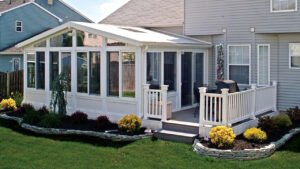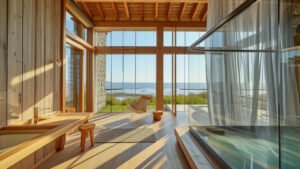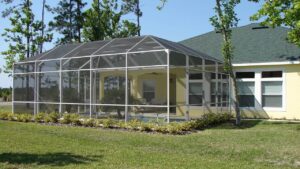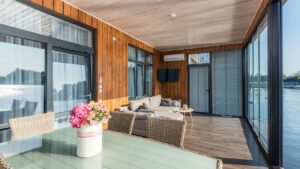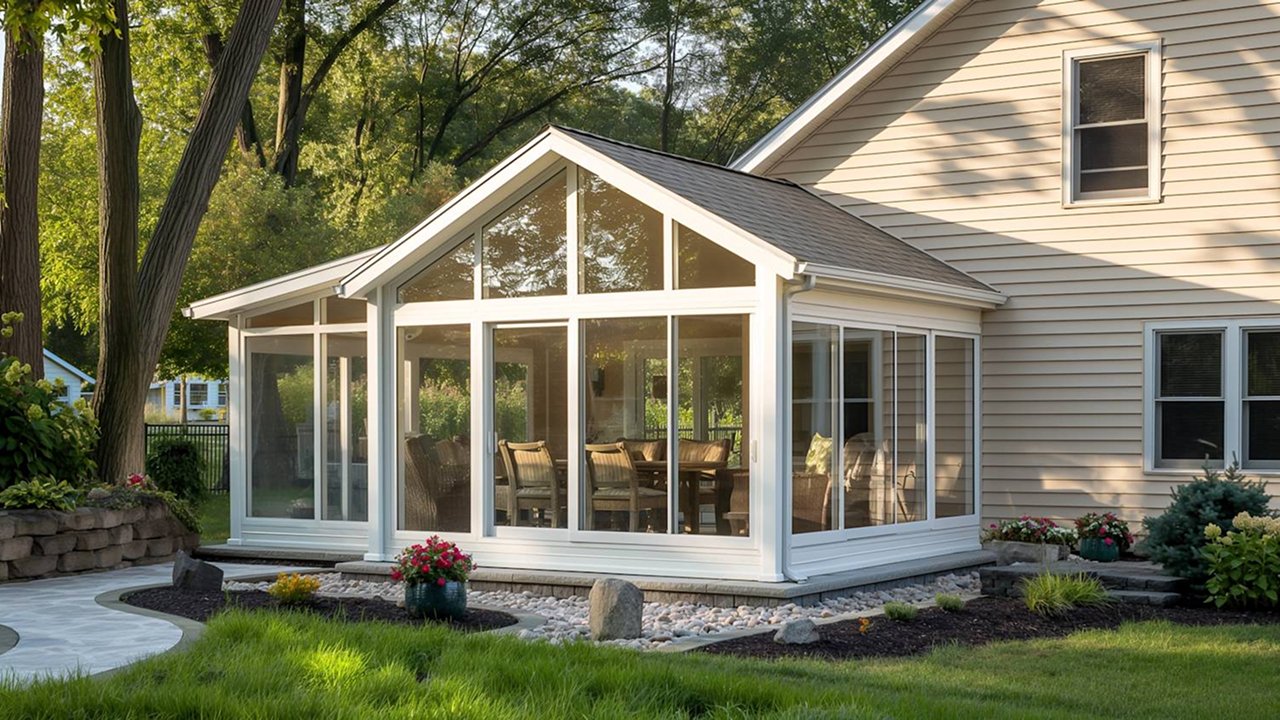
Unlike the conventional sunroom, which is for fair weather, a 4-season sunroom is design to be usable all year round, in any season, and in any climate. These fit-outs may indeed perform almost as genuine extensions to the home. Its similar to a conservatory addition, which merges outdoor beauty with indoor comfort. In this 4-season sunroom guide, we’ll explore the features, benefits, and design considerations that make it a smart investment.
Using premium insulation, energy-efficient materials, and temperature regulating equipment, ensures that a 4-season sunroom will be comfortable and usable throughout the year. The insulation and structural features of a 4-season sunroom is what differentiates it from a 3-season sunroom. This typically can only be useable in the spring, summer, and fall because of poor thermal retention.
What Is a 4-Season Sunroom Guide?
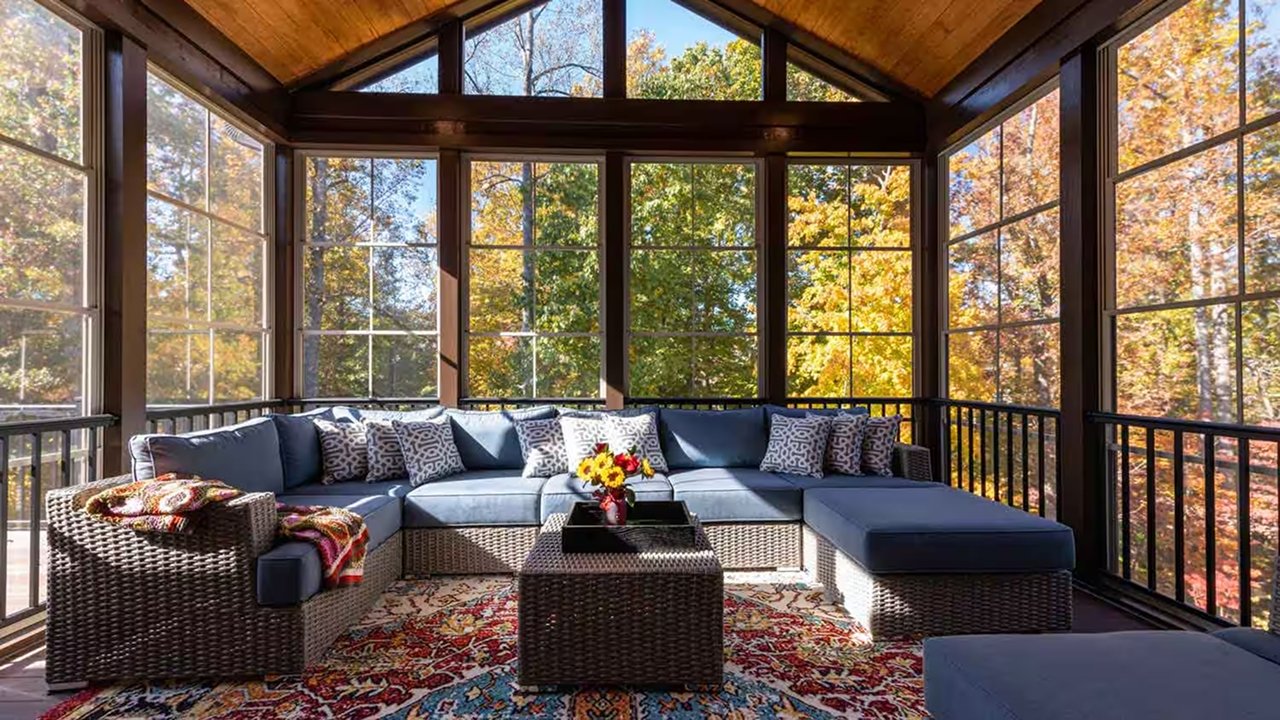
A 4-season sunroom is a fully enclose living space that is design to be thermally and structurally compatible with all four seasons. That includes high-efficiency sunroom windows, full-insulated roofs and walls, and compatibility with the home’s HVAC system or an independent unit.
Unlike a 3-season room, whose glass is single pane and other framing is uninsulated, a 4-season sunroom is so much more. It has weather-tight seals, thicker thermal glazing, and building materials that stop expansion, warping, and heat loss through the temperature ranges.
For a 4-season sunroom to achieve this kind of functionality, it typically has a standard foundation. It includes a strong frame (mostly using aluminum or vinyl), and energy-efficient building componentry that meets your local building codes.
For most homeowners, these sunrooms also serve as family rooms, hobbies rooms, breakfast nooks, quiet escapes – they are to be functional year-round.
Key Features That Define a 4-Season Sunroom
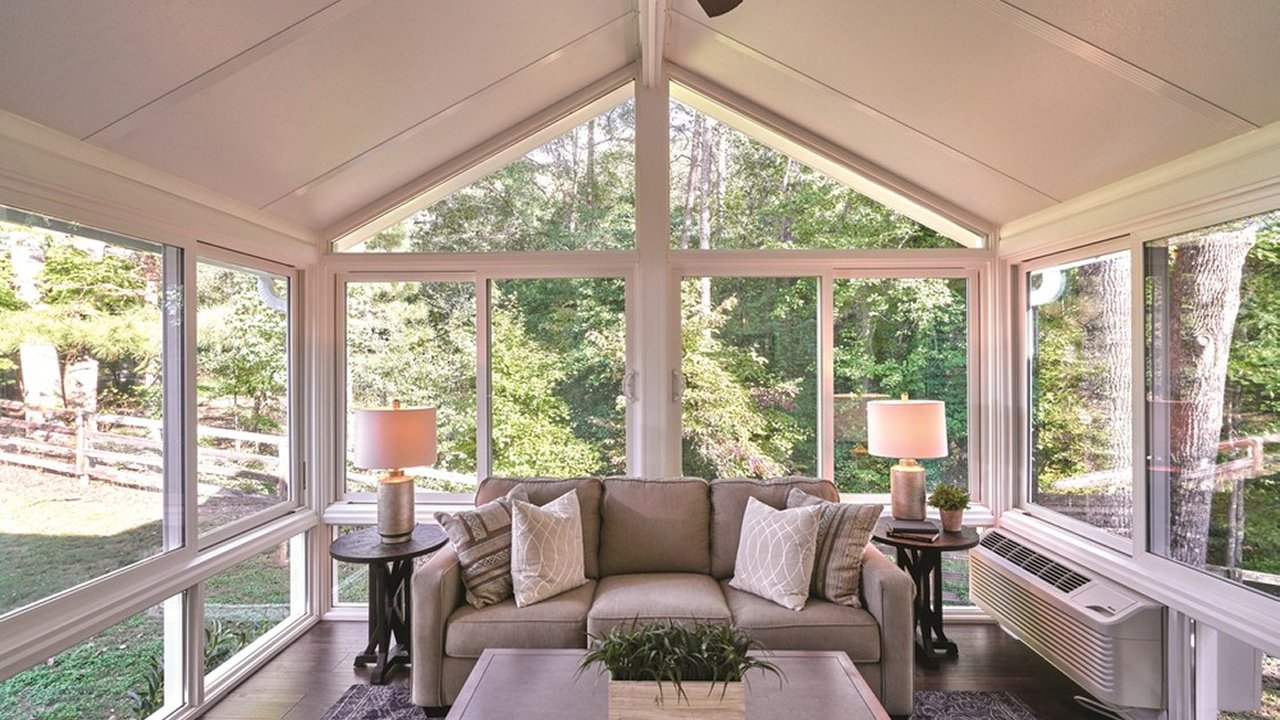
Insulation and temperature control are the foundation of any 4-season sunroom. These rooms typically feature:
- Insulated Roofing and Walls: Rather than glass ceilings or patio roofs, 4-season sunrooms have thermal, solid, and insulated panels. As they moderate the room’s temperature.
- Thermally Broken Frames: Here, a metal frame (often aluminum) with a thermal break means heat or cold cannot pass through the structure.
- Energy Efficient Glazing: Windows are double or triple-glazed with Low-E coatings and inert gas fills for insulation.
- HVAC Integration: The placement can be into the home’s central heating and cooling system or stand alone with mini-split units or radiant heat.
These inclusions serve not only to provide comfort levels but also to help the sunroom become more energy-efficient over the years.
Related Pick: Build Your Own Sunroom
Benefits of a 4-Season Sunroom
A 4-season sunroom is an investment that pays dividends in many ways.
- First, it increases livable square footage of your residence – great for large families or anyone who yearns for a light-filled escape.
- Secondly, as it works all year round, you can have natural sunlight input, even in cold and rainy months, which can be beneficial to mood and well-being.
- Third, real estate experts often recommend that 4 sunrooms raise the value of the property. Since it’s a home accent that a homebuyer likes about your house in the future.
They can also be useful for multiple purposes – as a home office, plant Conservatory, as a dining space, or even a playroom – all of which are concepts of today. The combination of the comfort of the interior when paired with the feeling of being outdoors makes it very appealing.
Material Considerations for Year-round Occupancy
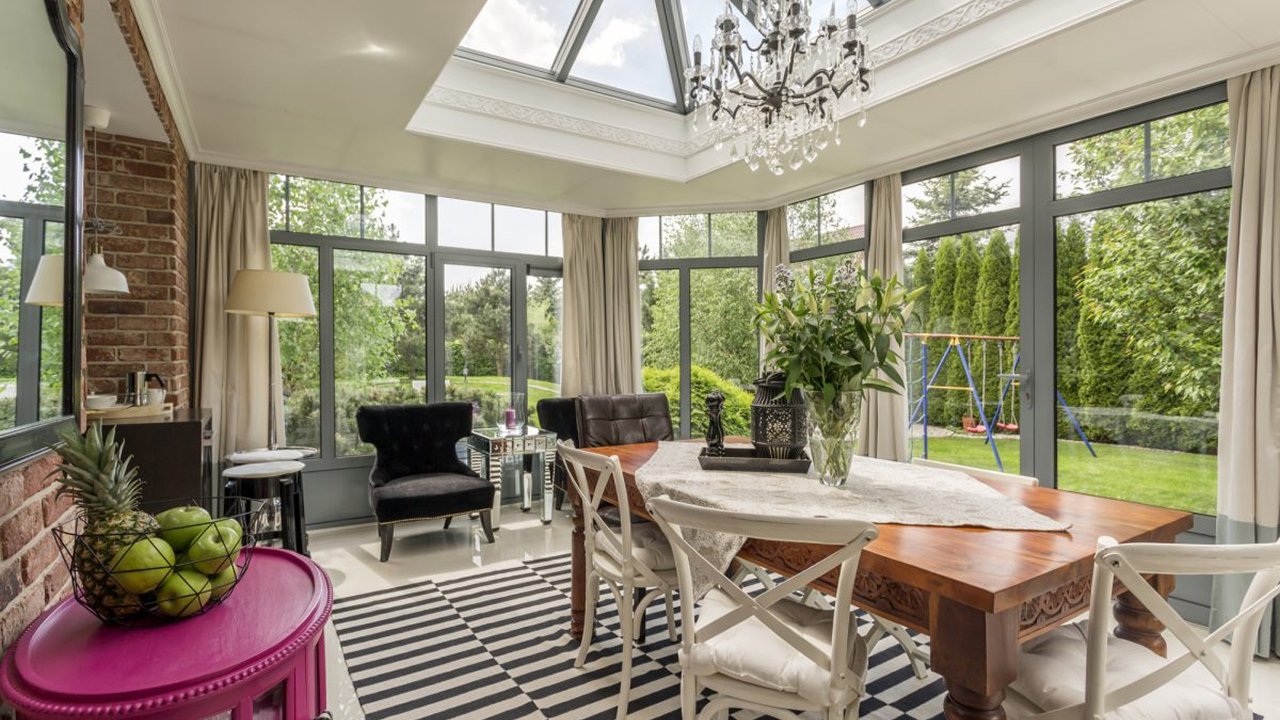
The proper material selection is essential for longevity, durability and energy efficiency.
Aluminum is the most popular frame material for patio doors because of its strength and lack of warping. When it’s paired with thermal breaks, it is a high-performance choice too.
Vinyl is also a top material for homeowners looking for something low-maintenance, but well-insulated. Wood composites can be employed in hybrid designs for added warmth and aesthetics, but without the heat buildup.
When it comes to roofing a sunroom, solid insulated panels will provide the ideal thermal performance. Some homeowners select glass roofs with Low-E coatings and tinting, to maximize their open-sky feeling and eliminate heat buildup.
When it comes to selecting flooring you must think about durability. Tile, engineered wood or insulated laminate will all work well. They can take the poor fluctuating temperatures and humidity as well without damaging the flooring.
Insulation, HVAC & Temperature Control
Insulation is the backbone of any 4-season sunroom. The walls and ceiling must be fully insulated with foam or fiberglass core for thermal uniformity. Choose R-values (a measure of insulation effectiveness) based on your regional climate – higher R-values are better in colder climates.
There are some good systems for controlling the climate:
- Modeling ductless heating and cooling options are mini-split systems and you can utilize them as heating and ventilation products in a sunroom.
- In northern climates, you might also want to consider the option of radiant floor heat for an extra warm and cozy feeling.
- Electric baseboard heat can be operated economically but is generally not the most efficient type of heating system.
- Ceiling fans and operable windows can provide natural cooling and ventilation in the summer season.
Another significant consideration is the use of vapor barriers and ensuring good air flow to prevent condensation, especially in the winter months. The use of thermal breaks in framing and insulated glass help to avoid the risk of cold surfaces which can draw in moisture.
Windows and Glazing For All-seasons Use
Windows account for the majority of the sunroom’s surface area and, as such, they are a prominent consideration for the sunroom comfort year-round. Most of the 4-season sunrooms are constructed with either double or triple panes packed with argon or krypton gas.
Low-E (Low Emissivity) coatings reflect infrared light while permitting visible light to pass through, helping to keep the sunroom warmer in the winter and cooler in the summer.
You Might Like to Read: Patio Enclosure Sunrooms
Operable windows are equally important. Slip-type, side-type, or hopper windows contribute to natural ventilation that generates less reliance on mechanical systems. Picture windows are large, fixed windows that maximize your views and increase the amount of daylight. However, you’ll want to mix them with operable windows to protect your airflow.
Design Options and Room Layout Ideas
Not only is a 4-season sunroom a space that serves a purpose, it’s also a beautiful addition to your home. Many homeowners look for inspiration through guides on ways to decorate your sunroom. The interior design has a lot to say in terms of how that space is experienced. Some common uses include:
- Lounge areas including soft seating, rugs, and reading nooks
- Dining rooms with combinations of indoor meals and outdoor ambiance
- Home offices with ample natural light and views
- Indoor gardens for indoor green in all seasons
Think about what direction the sunroom faces when arranging the layout – south-facing rooms receive the most amount of sun. Additionally, fill the room with layered lighting: ceiling fixtures, in addition to sufficient floor and wall lights to bathe the space in light at night.
The flooring needs to be both decorative and functional – tile for radiant heat benefits, or vinyl planks for easy clean-up.
The feel of the room is also influenced by the choices you make in ceilings. A vaulted ceiling with exposed beams could provide drama, while a flat ceiling might be more appropriate for a small or minimalist space.
Installation & Conversion from a 3-Season
You can re-purpose a 3-season sunroom as a 4-season room, but it will need some major updates. Key areas include:
- Window replacement with insulated units
- Insulate walls and roof, maybe re-frame some of the building
- Year-round temperature-controlled with HVAC install
- Electrical upgrades and additional outlets or lighting
Permit rules differ by location, but most towns or cities demand approval for structural changes or permanent installations. You might also require safety and energy code inspections.
FAQs
Yes – as long as it’s adequately insulated, heated or cooled, and meets local building codes. But if people are to live there year-round, classification as a livable structure as a zoning matter may become necessary.
Yes, the solid foundation where it will sit, such as a slab, crawlspace, or piering system, must meet the seasons of below-ground temperatures and satisfy the structural integrity.
On average, a 4-season sunroom will cost 30-60% more than a 3-season sunroom based on details like insulation/hvac/ and better quality windows. They range $25k – $70k+ based on size and materials.
The 4-season model can generally attach to most homes if done with prudence. But an assessment of site conditions, local codes, and structural tie-ins by a professional would be crucial.
In Closing
A 4-season sunroom guide provide the best of the outdoors and the indoors, and you will get to enjoy this space all year long. The right application of materials, insulation, and construction decisions make pleasurable living space all year long. Whether you are converting an existing space or starting from scratch, this 4-season sunroom guide helps you plan according to climate, lifestyle, and energy needs. A soundly constructed 4-season sunroom can ultimately represent a legitimate year-round sanctuary. It will be socially valuable, too; in terms of livability and appeal to your home.
You Might Like to Read: Sunroom Kits Guide